Whiskey · Sour · Sour
Algonquin Recipe
A Prohibition-era rye whiskey classic where dry vermouth meets bright pineapple juice. Rye's spice and dry vermouth's snap meet bright, tart pineapple juice for a whiskey sour that reads more orchard than citrus bar. A Prohibition-era relic built for anyone who wants a Manhattan with more lift.
- Prep Time
- 1.5 min
- Method
- Shaken
- Glass
- Coupe glass
- Strength
- Spirit-forward
Every recipe on Sipped Right is tested for taste and balance before it's published.
Last updated October 20, 2026
About the Algonquin
The Algonquin is a Prohibition-era rye whiskey cocktail — two parts rye, one part dry vermouth, one part pineapple juice, shaken and strained — named for New York's Algonquin Hotel, longtime home of the Algonquin Round Table literary circle. It first appeared in print in 1935, using pineapple juice in place of citrus or bitters to build its tartness. The name honors the hotel's storied lunch table — Dorothy Parker, Robert Benchley, Alexander Woollcott and the rest of the self-styled Vicious Circle met there through the 1920s — though the cocktail itself surfaced a decade later, first documented in Gustav Selmer Fougner's 1935 anthology Along the Wine Trail and popularized further by a 1937 Esquire piece written by Round Table regular Murdock Pemberton. Bartenders often describe it as a Manhattan with pineapple juice standing in for the bitters — the same rye-and-vermouth spine, with a sweeter, fruitier finish.
Two parts rye whiskey to one part dry vermouth to one part pineapple juice (1.5 oz : 0.75 oz : 0.75 oz) is the defining split — rye stays dominant while vermouth and pineapple juice share the remaining half evenly, so neither the wine-forward dryness nor the fruit ever tips the drink into a punch. It's often called a fruitier cousin of the Manhattan: the same 2:1 whiskey-to-vermouth backbone, but with pineapple juice standing in for the bitters and dry vermouth in place of sweet.


Ingredients
- Rye Whiskey1 ½ oz
- Dry Vermouth¾ oz
- Pineapple Juice¾ oz
- Pineapple, for garnish1 wedge
- Maraschino cherry, for garnish1
Method
- Measure and pour the rye whiskey, dry vermouth and pineapple juice into the shaker tin.
- Add a scoop of ice to the shaker tin.
- Shake for 15 seconds.
- Fine-strain the cocktail into a chilled coupe glass.
- Cut a fresh pineapple wedge.
- Skewer the pineapple wedge with a maraschino cherry and rest it across the rim of the glass.


Glass & Garnish
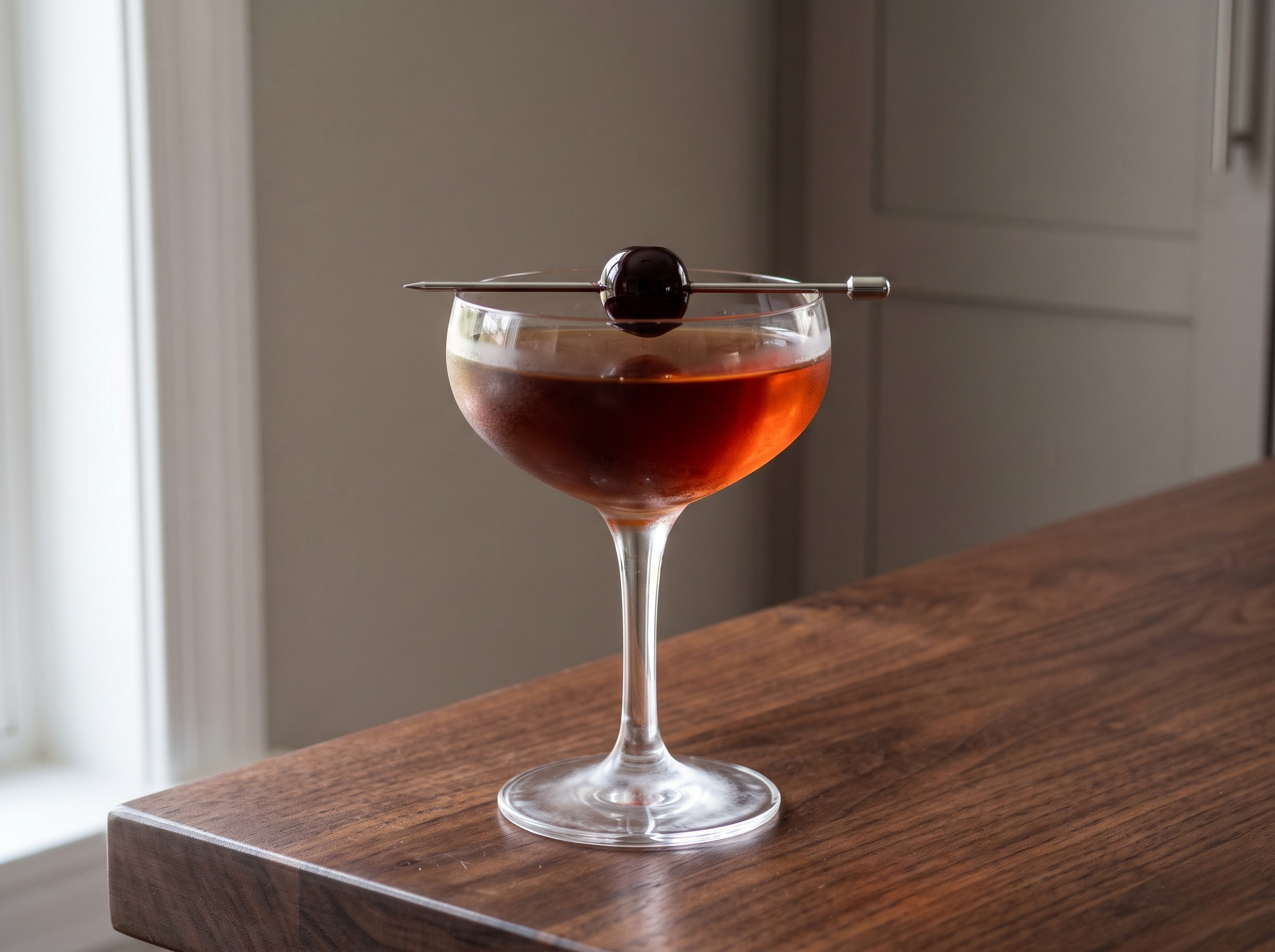
Coupe glass, served up with no ice — the Algonquin is shaken hard and fine-strained, so it arrives already cold, and ice in the glass would only dilute the pineapple juice's tang and blunt the rye underneath. Chill the coupe in the freezer beforehand if you can, since there's no ice in the glass to keep it cold as you drink. Garnish with a fresh pineapple wedge and a maraschino cherry, skewered together and rested across the rim. It isn't just decoration: the pineapple wedge signals the juice inside before the first sip, and the cherry gives you something sweet to reach for once the glass runs dry — a nod to the fruit-forward, more tropical half of this rye classic.
Notes
A few versions garnish with a citrus twist or skip the garnish, which is a minor variation. Scales cleanly for batching; add the pineapple juice fresh at shake time rather than pre-batching it.
Tools Used
Affiliate links
As an Amazon Associate, Sipped Right earns commission from qualifying purchases made via links on this website, at no extra cost to you.
FAQ
- Why is the Algonquin cocktail named after the Algonquin Hotel?
- It's named for the hotel's Algonquin Round Table, the group of New York writers and critics — Dorothy Parker among them — who lunched there through the 1920s. The drink itself came later, first appearing in print in 1935 and gaining wider fame via a 1937 Esquire piece by Round Table regular Murdock Pemberton.
- What's the best rye whiskey for an Algonquin?
- A spicier, higher-proof rye — something like Rittenhouse or Wild Turkey 101 — holds its own best against the dry vermouth and pineapple juice. A softer, lower-proof rye tends to get overwhelmed by the fruit and reads more diluted than intended.
- Can I make an Algonquin with bourbon instead of rye?
- You can, but it changes the character — bourbon's sweeter corn base softens the drink's edge, while rye's spice is what keeps it from tasting like a fruit punch. Expect a rounder, less peppery result if you substitute.
- Are there variations on the classic Algonquin?
- Yes — some modern versions split the dry vermouth with a splash of bianco vermouth for extra sweetness, or add a dash or two of Peychaud's-style bitters for spice. The classic two-parts-rye, one-part-vermouth, one-part-pineapple-juice formula remains the most common version.
- Does the Algonquin need a pineapple garnish?
- It's traditional but not essential — the drink already gets its pineapple character from the juice itself. A skewered pineapple wedge and maraschino cherry signal what's inside and finish the classic version, though some recipes skip garnish entirely.