Whiskey · Classic · Bittersweet
Manhattan Recipe
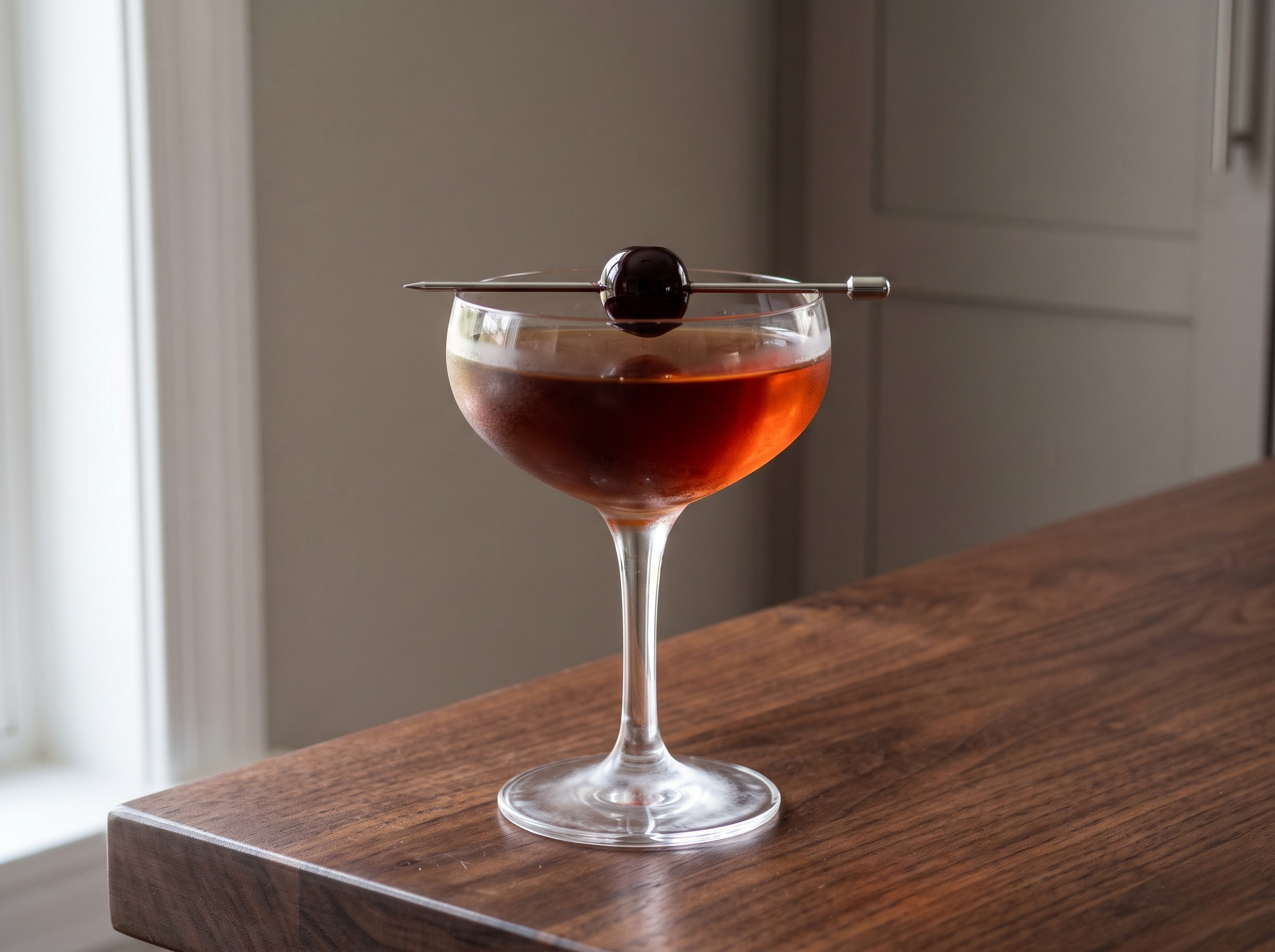
Rye whiskey and sweet vermouth, stirred cold with a whisper of bitters, into a drink that tastes like it was built around a slow evening. Spicy rye and rich sweet vermouth, stirred until cold and silky, with bitters tying them together. A sophisticated spirit-forward sipper for slow evenings.
- Prep Time
- 1.5 min
- Method
- Stirred
- Glass
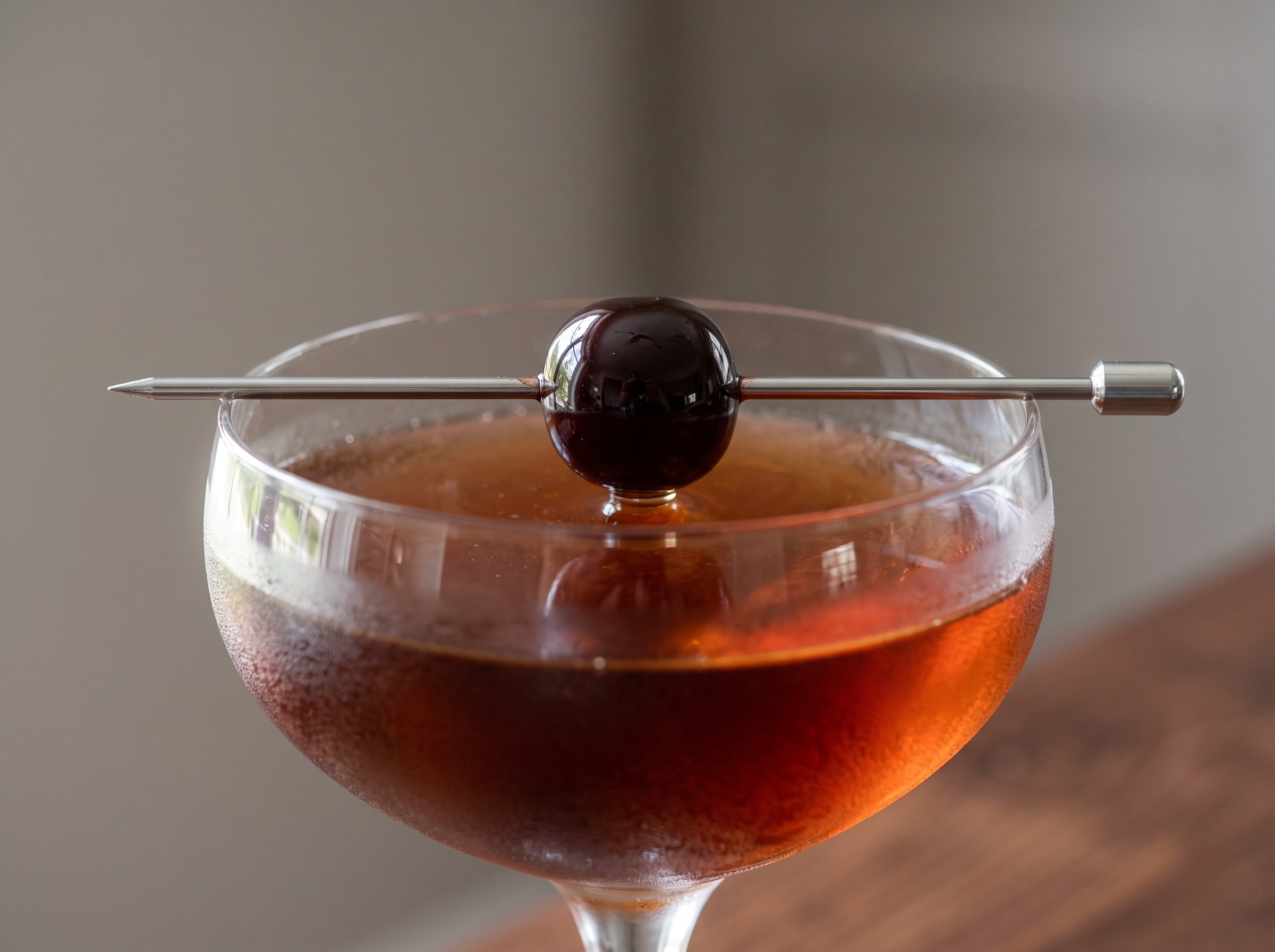
- Chilled coupe or martini glass
- Strength
- Spirit-forward
Every recipe on Sipped Right is tested for taste and balance before it's published.
Last updated November 16, 2026
About the Manhattan
The Manhattan's exact birthplace is disputed — a popular story ties it to a banquet at Manhattan's own club in the 1870s, sometimes linked to a Churchill family member hosting the event, but historians have found no reliable record placing that person in New York at the time. The more likely story is simpler: it emerged from Manhattan bars in the same era rye whiskey and Italian vermouth both became widely available in the city.
The Manhattan runs on a 2:1 ratio, 2 oz rye to 1 oz sweet vermouth, with 2 dashes of Angostura. That ratio keeps the whiskey firmly in charge while the vermouth adds sweetness and depth. Swap the rye for Scotch and it becomes a Rob Roy.
Ingredients
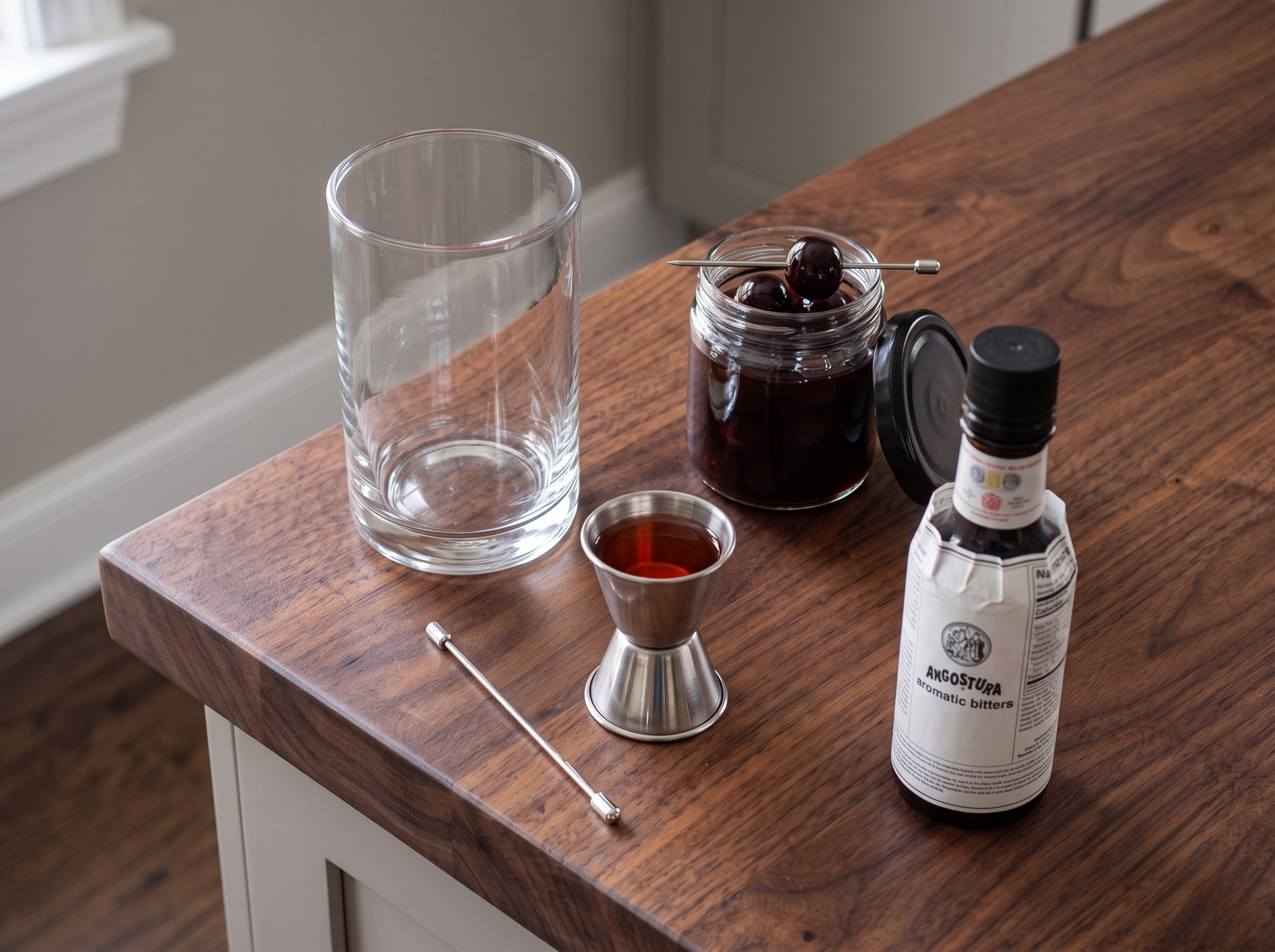
- Rye whiskey2 oz
- Sweet vermouth1 oz
- Angostura bitters2 dashes
- Luxardo cherry1, for garnish
1 dash in this recipe = 2 Japanese dasher-bottle dashes, if that's what's in your kit.
Method
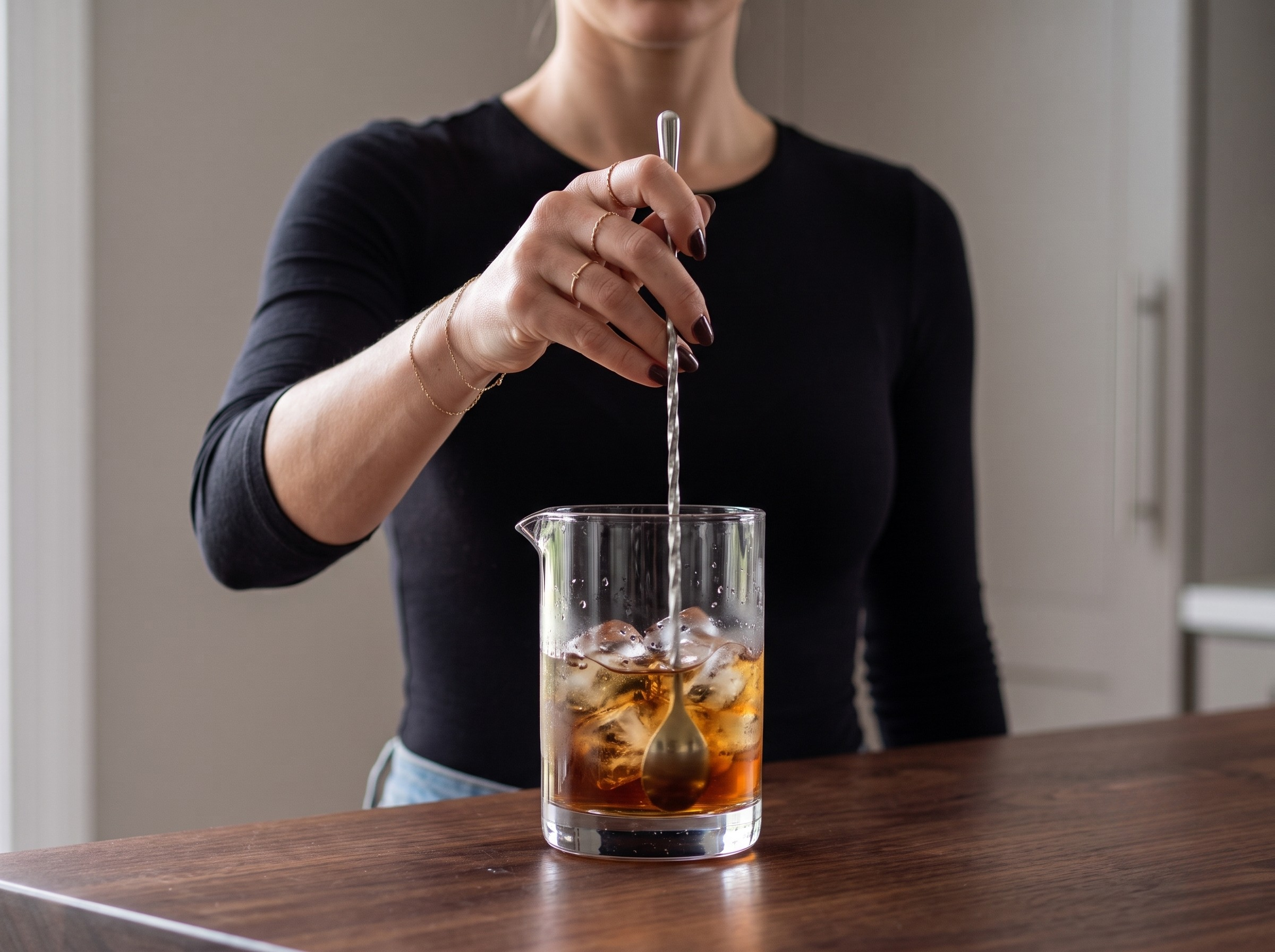
- Measure and pour the rye whiskey, sweet vermouth and Angostura bitters into the mixing glass.
- Add a scoop of ice to the mixing glass.
- Stir for 30 seconds.
- Strain the cocktail into a chilled coupe.
- Garnish with a Luxardo cherry.
Glass & Garnish
Chilled coupe or martini glass, served up — no ice, since the drink is fully diluted during stirring. Garnish: one Luxardo cherry.
Notes
No rye? Bourbon works, though the drink turns sweeter and softer. Batching: multiply the 2:1:dash ratio, mix ahead without ice, stir over ice per glass at serving time. Common mistake: over-stirring or over-icing, which over-dilutes. Pairs well with aged cheddar or dark chocolate.
Tools Used
Affiliate links
As an Amazon Associate, Sipped Right earns commission from qualifying purchases made via links on this website, at no extra cost to you.
FAQ
- How do I scale a Manhattan up for a party?
- Set the servings control above the ingredients to your guest count to get the whiskey, vermouth and bitters amounts for each drink. Then stir each serving over ice as it is needed, so every glass gets the right chill and dilution without watering down the batch.
- Can I make a Manhattan without rye?
- Yes, bourbon works. The drink becomes sweeter and softer, with less of the dry pepper spice that rye brings. It is a perfectly good variation, and many people prefer it, but it will taste a little rounder than the classic.
- What's the best rye for a Manhattan?
- A rye with some spice and proof keeps the sweet vermouth from taking over. Rye's peppery edge is what balances the sweetness, so a bold, dry rye gives the most classic result while a mellow one gives a softer drink.
- What is a Perfect Manhattan?
- A Perfect Manhattan splits the vermouth between sweet and dry, usually half and half. It tastes lighter and drier than the classic version, with a more herbal finish. The whiskey and bitters stay the same, so it is a gentle variation.
- Does a Manhattan need a cherry?
- A cherry is the traditional garnish, and a Luxardo cherry adds a deep, bittersweet note at the end of the glass. An orange twist is a common alternative that gives a brighter, more aromatic finish. Both work well.
- What's the origin of the Manhattan?
- The Manhattan's birthplace is disputed. One popular story ties it to a banquet in the 1870s, but historians have found no reliable record to support it. The more likely story is that it emerged from Manhattan bars when rye whiskey and Italian vermouth both became widely available.
Related Cocktails
Whiskey
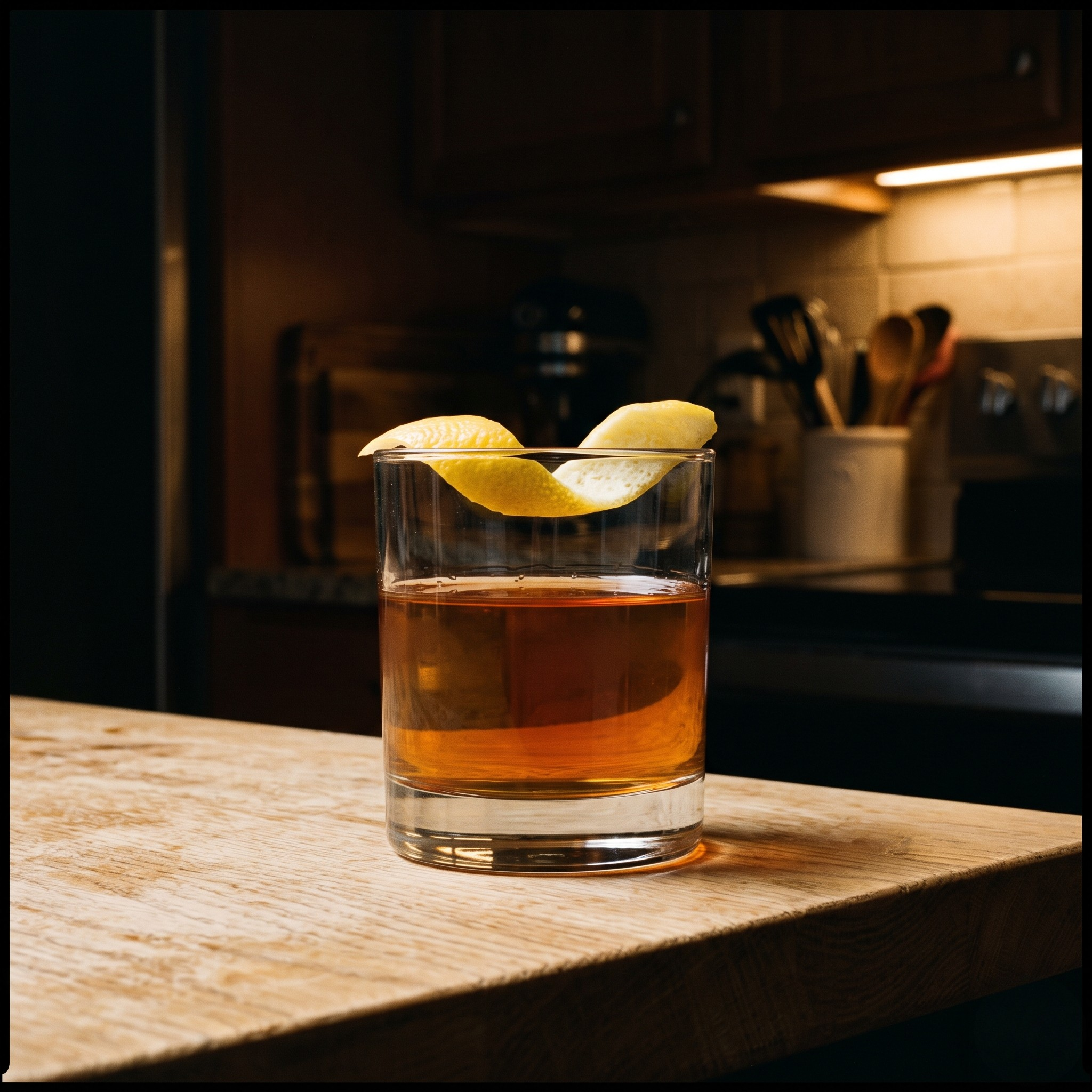
Sazerac
An absinthe-rinsed glass, rye, and Peychaud's bitters — one of America's oldest named cocktails, still made exactly this way.
Whiskey
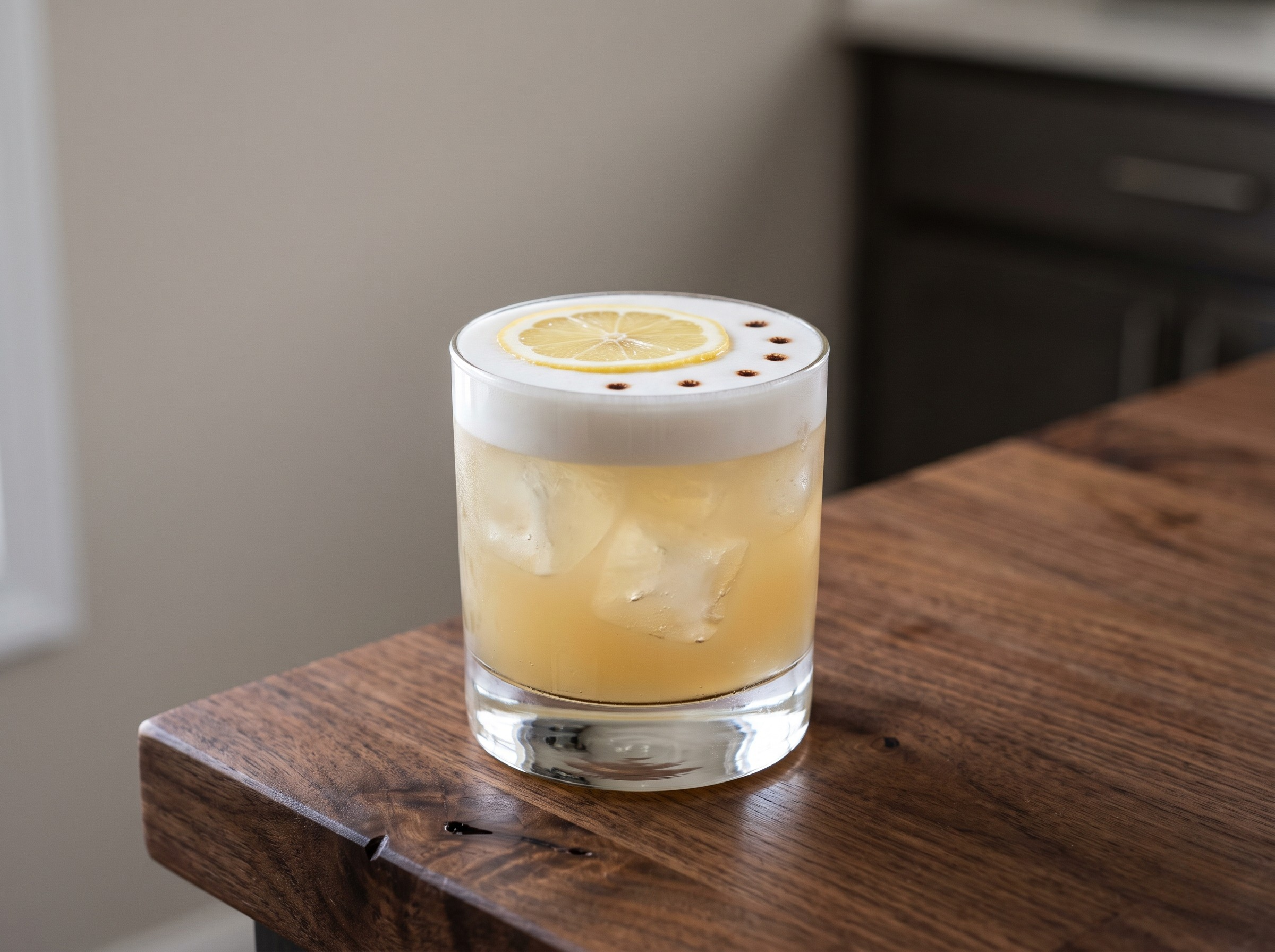
Whiskey Sour
Bourbon, fresh lemon, and semi-rich simple syrup, dry-shaken with egg white for a texture that's closer to silk than juice.
Whiskey
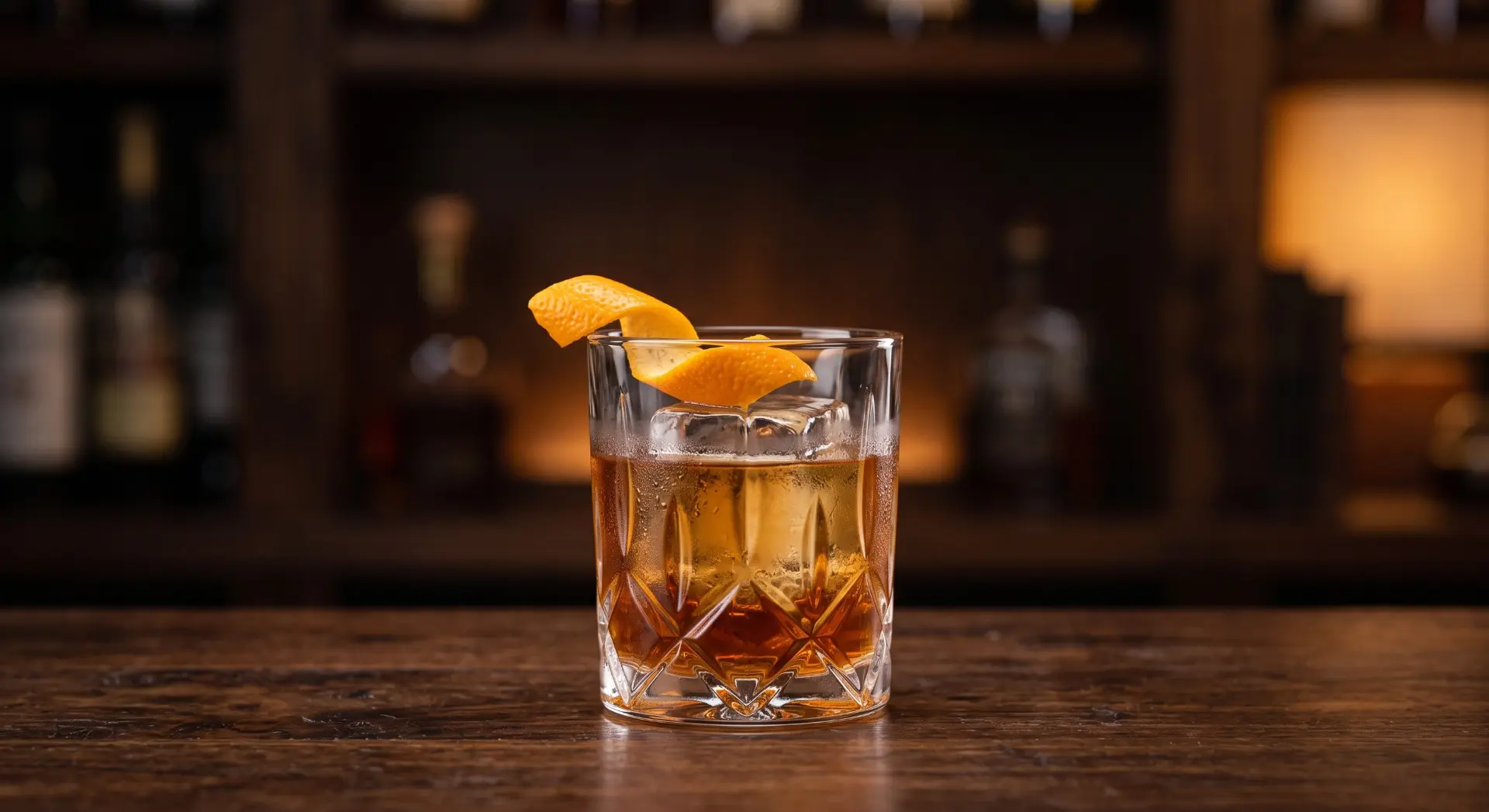
Old Fashioned
Three ingredients, one stir — the drink that taught the world what a cocktail should be.