
Gin · Sour · Herbaceous
Cucumber Basil Gimlet Recipe
A gimlet that raided the garden on its way to the shaker. Cool, garden-fresh, and lightly sweet, this gin sour is built for hot afternoons — a natural pour for a summer brunch or a backyard get-together.
- Prep Time
- 2 min
- Method
- Shaken
- Glass
- Coupe glass
- Strength
- Balanced
Every recipe on Sipped Right is tested for taste and balance before it's published.
Last updated October 20, 2026
About the Cucumber Basil Gimlet
The Cucumber Basil Gimlet is a modern craft-cocktail-era variation on the classic Gimlet — gin, lime juice, and sweetener — rather than a fixed historical drink with one documented origin story. It emerged during the 2000s-2010s farm-to-bar and craft cocktail movement, as bartenders and home mixologists began muddling fresh garden cucumber and basil into gimlets. It is best understood today as a popular garden-fresh summer template found across seasonal cocktail menus and recipe blogs, rather than a codified classic.
The classic Gimlet keeps things simple: gin, lime, and sweetener, typically around 2:0.75:0.5, built for a sharp, citrus-forward sip. This variation keeps that same base ratio — roughly 2 oz gin to 3/4 oz lime juice to 1/2 oz simple syrup — but muddles fresh cucumber and basil directly in the shaker before the liquid ever goes in. That produce infuses cooling vegetal juice and herbal aromatics into the mix, softening the citrus edge the original Gimlet leans on and shifting the balance from purely tart to garden-fresh and cooling.

Ingredients
- Gin2 oz
- Fresh lime juice¾ oz
- Simple syrup½ oz
- Cucumber5 slices
- Fresh basil8 leaves
Method
- Muddle the cucumber and basil in the shaker.
- Measure and pour the gin, lime juice and simple syrup into the shaker.
- Add a scoop of ice to the shaker.
- Shake for 15 seconds.
- Fine-strain the cocktail into a chilled coupe glass.
- Cut a thin cucumber ribbon and select a fresh basil leaf for garnish.
- Garnish with the cucumber ribbon and basil leaf.


Glass & Garnish
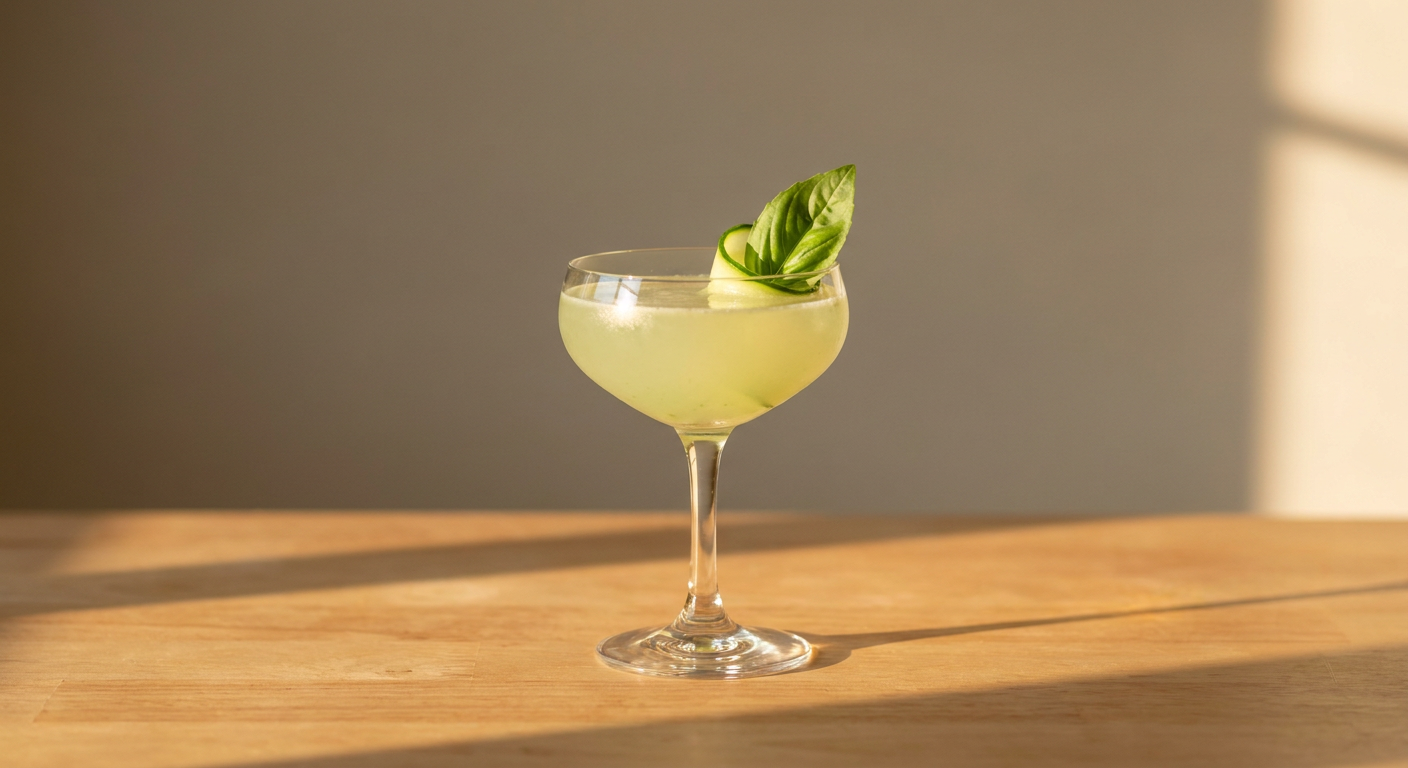
Coupe glass, chilled. Garnish with a cucumber ribbon and fresh basil leaf.
Notes
A modern variation rather than a codified classic: muddled fresh cucumber and basil with lime, simple syrup and gin, shaken.
Tools Used
Affiliate links
As an Amazon Associate, Sipped Right earns commission from qualifying purchases made via links on this website, at no extra cost to you.
FAQ
- Can I batch this cocktail for a party?
- Yes — muddle the cucumber and basil with the lime juice and simple syrup first, strain out the solids, then combine that infused liquid with the gin in a pitcher, scaling the 2:0.75:0.5 ratio to your guest count. Refrigerate and shake or stir each glass with fresh ice to order.
- Can I use mint instead of basil?
- Yes — swap in an equal amount of fresh mint for a cooler, more traditional herbal note, closer to a mojito-gimlet hybrid. Basil brings a slightly peppery, sweet edge that mint does not, so the drink turns brighter and more menthol-forward with the swap, but both pair well with cucumber.
- What kind of gin works best?
- A London Dry gin with clean, citrus-forward botanicals lets the cucumber and basil shine without competing. Avoid heavily floral or barrel-aged gins, which can clash with the fresh produce. A cucumber-forward gin such as Hendrick's also works well and echoes the drink's core flavor.
- What are some popular variations on this drink?
- Bartenders often swap gin for vodka for a Cucumber Basil Vodka Gimlet, top with soda or tonic for a lower-proof spritz-style pour, or muddle in a slice of jalapeno for heat. Honey syrup in place of simple syrup is another common tweak for a rounder sweetness.
- What is the best garnish for a Cucumber Basil Gimlet?
- A thin cucumber ribbon, peeled lengthwise with a vegetable peeler, draped over the rim, plus a fresh basil leaf slapped between your palms to release its oils before placing it. The slap wakes up the aroma right where you will smell it as you sip.
- Is the Cucumber Basil Gimlet a classic cocktail?
- Not officially — there is no codified classic recipe under this exact name. It is a modern riff on the 19th-century Gimlet (gin, lime, sweetener) that emerged during the 2000s-2010s craft cocktail and farm-to-bar movement, when bartenders began muddling fresh garden produce into classic templates.

