Aperitif/Liqueur · Classic · Creamy
Pink Squirrel Recipe
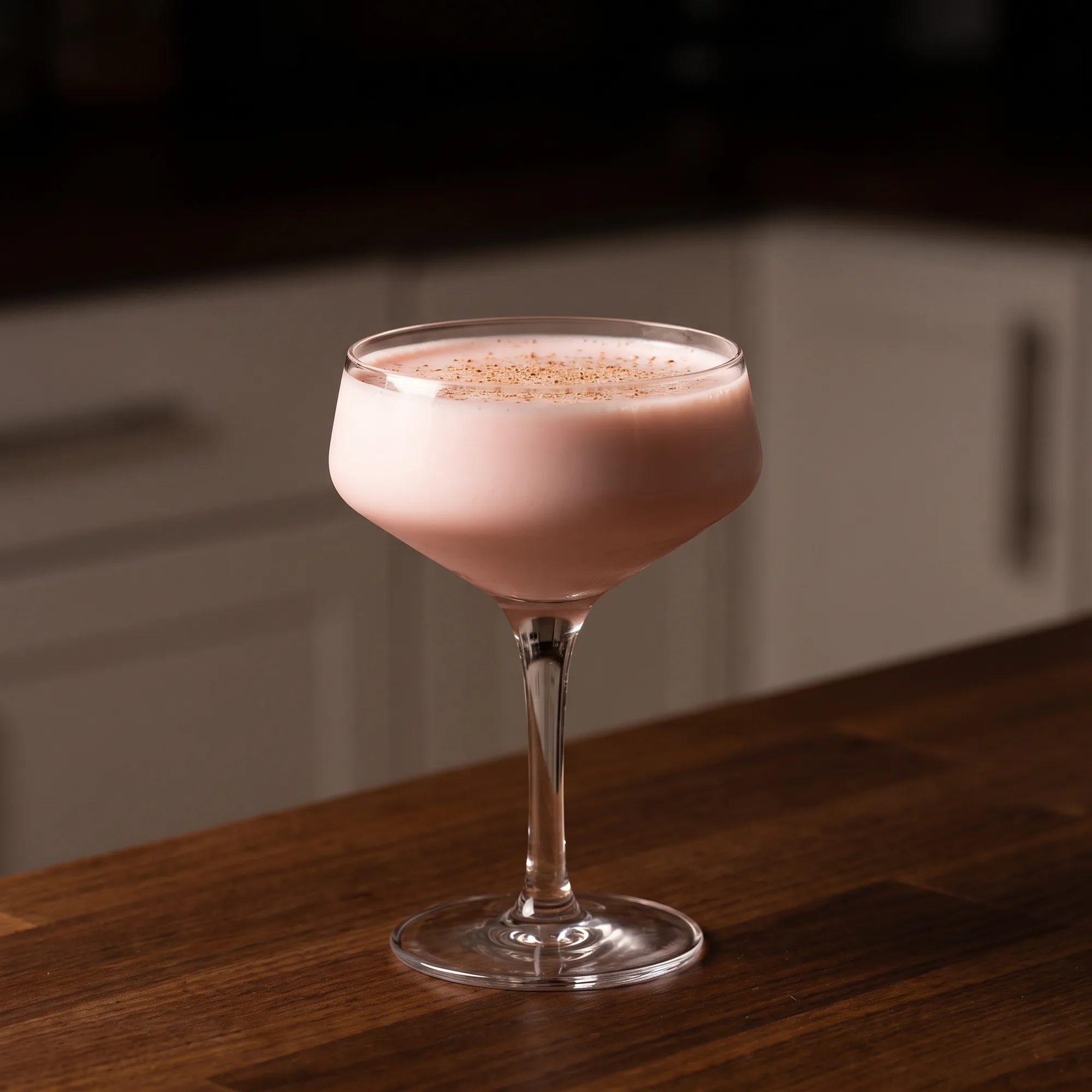
A pastel-pink, almond-and-chocolate dessert cocktail that drinks like a boozy nightcap wearing a milkshake's disguise. Sweet, nutty crème de noyaux meets bittersweet white chocolate liqueur and cold cream, landing closer to a liquid dessert than a mixed drink — pour it after a meal, not before it.
- Prep Time
- 1.5 min
- Method
- Shaken
- Glass
- A chilled coupe glass
- Strength
- Light
Every recipe on Sipped Right is tested for taste and balance before it's published.
Last updated November 16, 2026
About the Pink Squirrel
The Pink Squirrel is a mid-20th-century American dessert cocktail that grew out of Wisconsin's supper-club scene, most often credited to Bryant's Cocktail Lounge in Milwaukee during the 1940s-50s. It leaned into the era's taste for sweet, candy-colored after-dinner drinks by building around crème de noyaux, an almond-flavored liqueur made from apricot or cherry pits, which gives the cocktail its natural pale-pink color without any dye. A widely repeated (if hard-to-verify) story credits a 1951 publicity stunt for a crème de noyaux brand — an actress touring bars with a live pink squirrel, asking for a cocktail of the same name — with cementing the drink's identity. It went on to become a fixture of Midwestern supper-club dessert menus alongside its minty cousin, the Grasshopper.
The Pink Squirrel runs on a 1:1:1.5 ratio of crème de noyaux to white crème de cacao to heavy cream — a slightly cream-heavy build that keeps the drink pourable and frothy rather than as thick as a milkshake, while still tasting predominantly of toasted almond and chocolate. It's built on the same equal-parts-liqueur-plus-cream template as the Grasshopper (swap the noyaux for green crème de menthe) and the Brandy Alexander (swap it for cognac), all dessert cocktails from the same mid-century American after-dinner family.
Ingredients
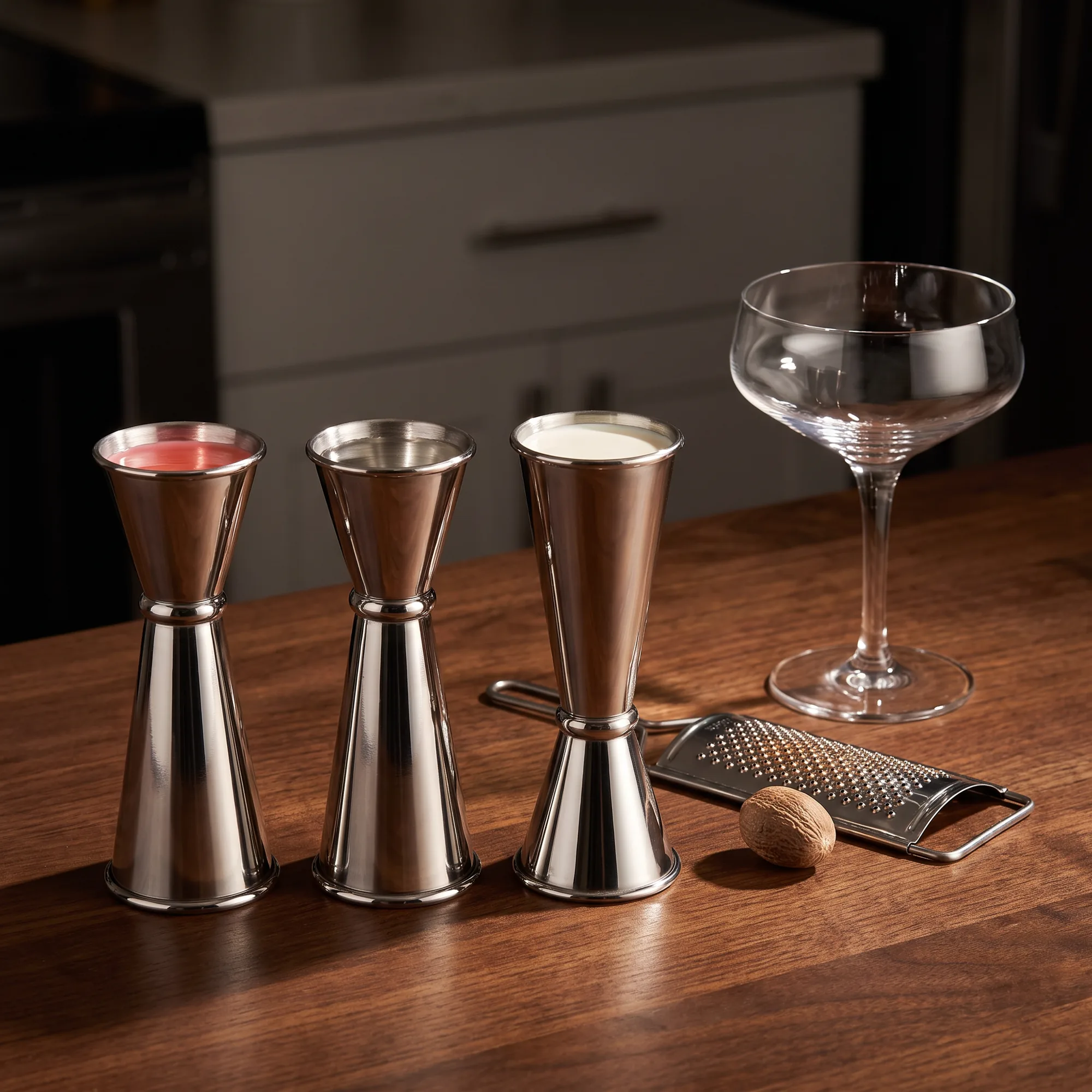
- Crème de noyaux1 oz
- White crème de cacao1 oz
- Heavy cream1 ½ oz
- Freshly grated nutmegFor garnish
Method
- Measure and pour the crème de noyaux, white crème de cacao and heavy cream into the shaker tin.
- Add ice to the shaker tin.
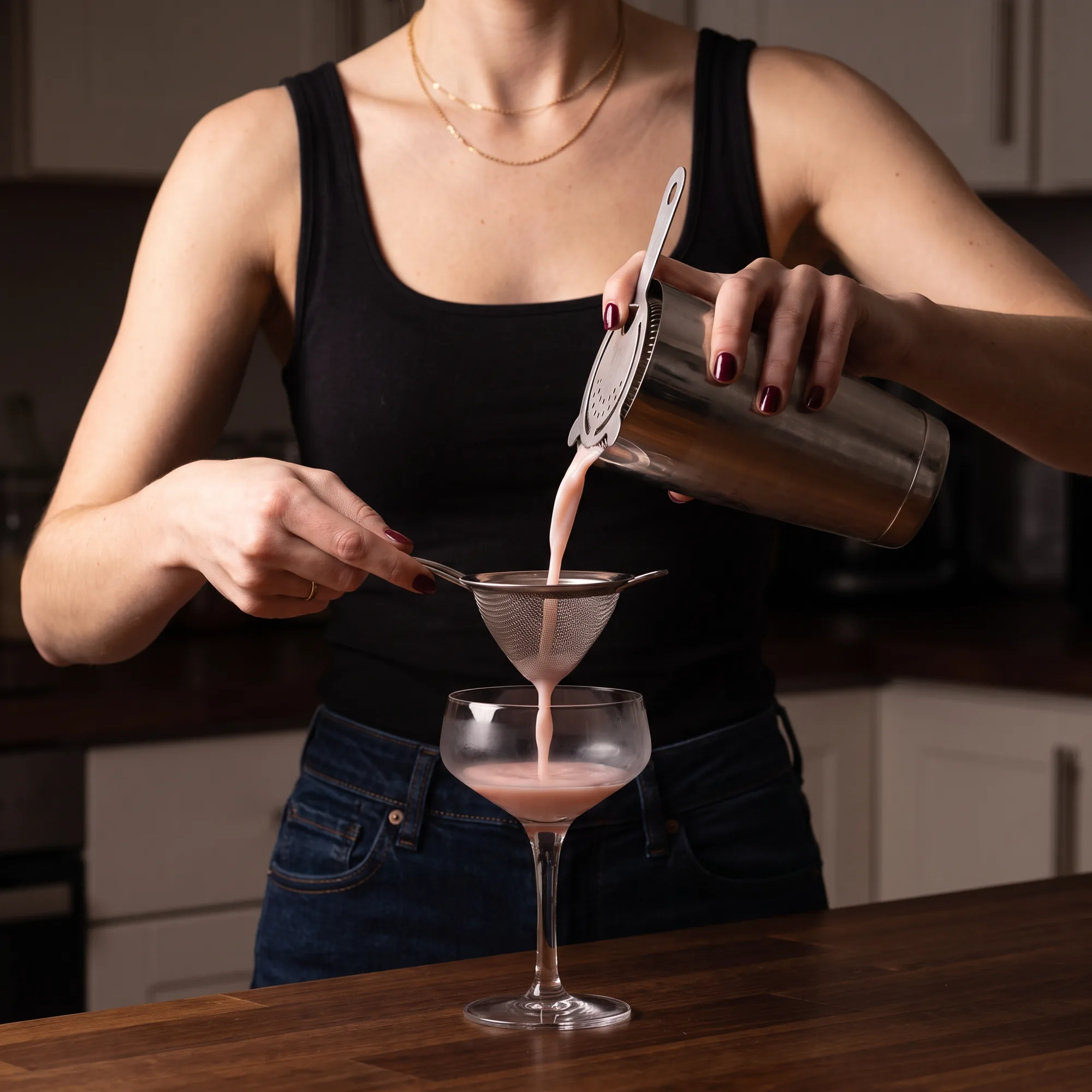
- Shake for 15 seconds.
- Fine-strain the cocktail into a chilled coupe glass.
- Grate fresh nutmeg.
- Dust the grated nutmeg over the top of the drink.
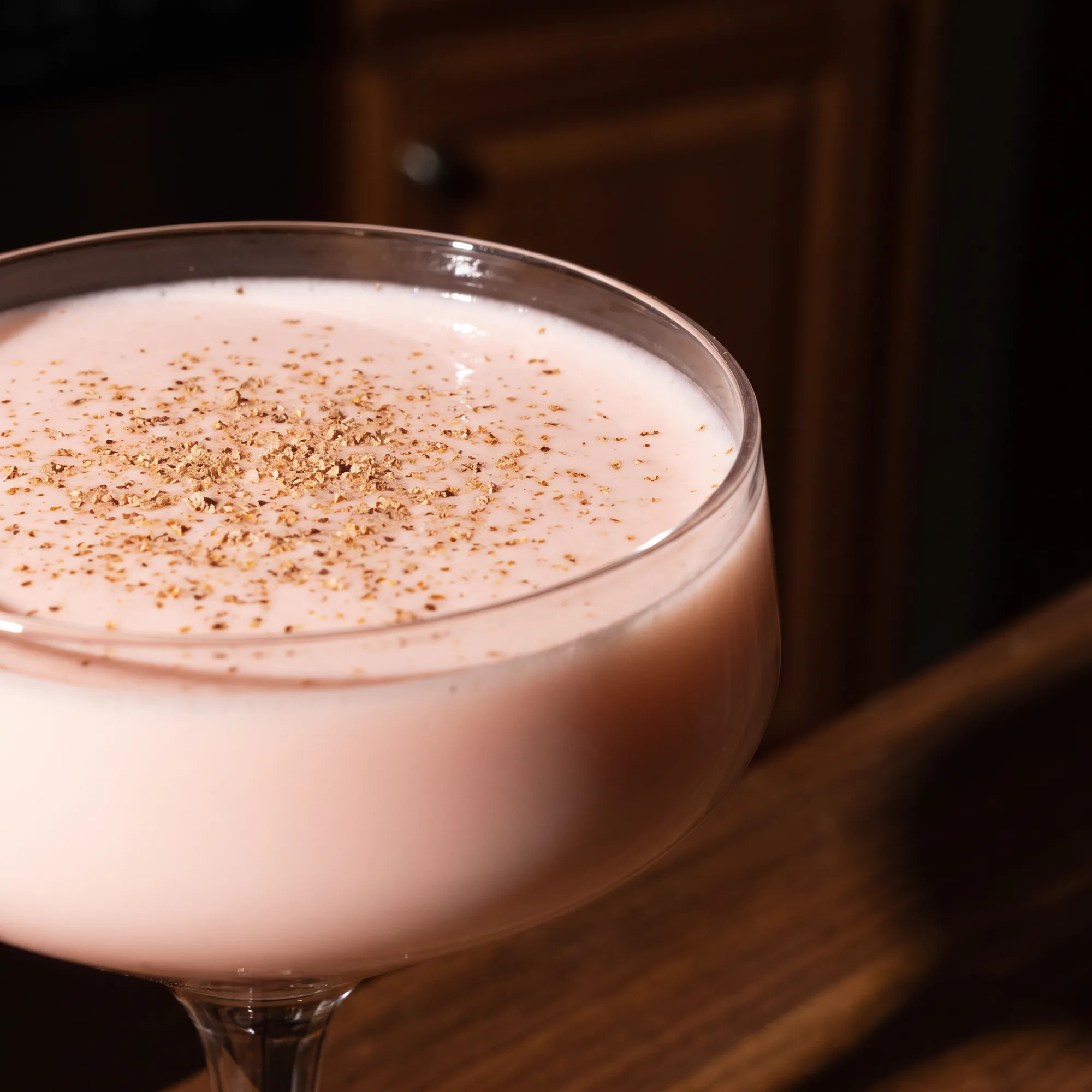
Glass & Garnish
A chilled coupe glass, served up with no ice — the shake already does the diluting and chilling this drink needs, so ice in the glass would only water it down further. Chill the coupe ahead of time if you can; a lukewarm pour makes the cream taste heavier than it should. Garnish with a light, even dusting of freshly grated nutmeg across the surface, added right before serving. It's not just decoration: the warm, faintly bitter spice cuts through the crème de noyaux and crème de cacao's sweetness, so the drink finishes balanced instead of reading as pure dessert.
Notes
The ratio here is 1:1:1.5 crème de noyaux to white crème de cacao to heavy cream, rather than the equal-parts version some home recipes use — the extra half-ounce of cream keeps it pourable instead of as thick as a milkshake. Crème de noyaux can be hard to find outside a well-stocked liquor store; 3 parts amaretto to 1 part pomegranate juice or grenadine works as a substitute in a pinch. Shake to order rather than batching, since cream doesn't hold well pre-mixed.
Tools Used
Affiliate links
As an Amazon Associate, Sipped Right earns commission from qualifying purchases made via links on this website, at no extra cost to you.
FAQ
- Can I substitute for crème de noyaux?
- Yes — it can be hard to find, so try mixing 3 parts amaretto with 1 part pomegranate juice or grenadine as a stand-in. It won't be identical, since crème de noyaux is made from stone-fruit pits rather than actual almonds, but it recreates a similar toasted-almond sweetness and pink tint reasonably well.
- Is the Pink Squirrel a strong drink?
- Not really — there's no base spirit at all, just two liqueurs (roughly 25-30 proof) cut further with heavy cream, so a full serving lands closer to a light dessert wine than a spirited cocktail. It's built for slow sipping after a meal, not for standing in as a nightcap with real bite.
- Can I batch a Pink Squirrel for a group?
- Yes — scale the 1:1:1.5 ratio of crème de noyaux, white crème de cacao and heavy cream by the number of servings and keep the batch refrigerated, since cream separates at room temperature. Shake each serving individually with ice right before pouring rather than pre-shaking the whole batch, so it stays properly cold and frothy.
- What variations exist on the classic Pink Squirrel?
- The most common twist swaps the shaken version for a blended, frozen one — essentially a boozy milkshake — which is how many Wisconsin supper clubs still serve it. Some bars add a scoop of vanilla ice cream instead of, or alongside, the cream for an even richer, dessert-forward pour.
- What's the traditional Pink Squirrel garnish?
- A light dusting of freshly grated nutmeg across the top, added just before serving, is the standard finish. It's not just decorative — the warm, slightly bitter spice cuts through the drink's sweetness so it doesn't read as pure candy, the same trick used on cream-cocktail cousins like the Brandy Alexander and Grasshopper.
- Where does the Pink Squirrel cocktail come from?
- It's a Wisconsin supper-club original, most often traced to Bryant's Cocktail Lounge in Milwaukee during the 1940s-50s. A widely repeated story credits a 1951 publicity stunt — an actress touring bars with a live pink squirrel — with popularizing the name, and the drink soon became a fixture of Midwestern dessert-cart cocktail menus.
Related Cocktails
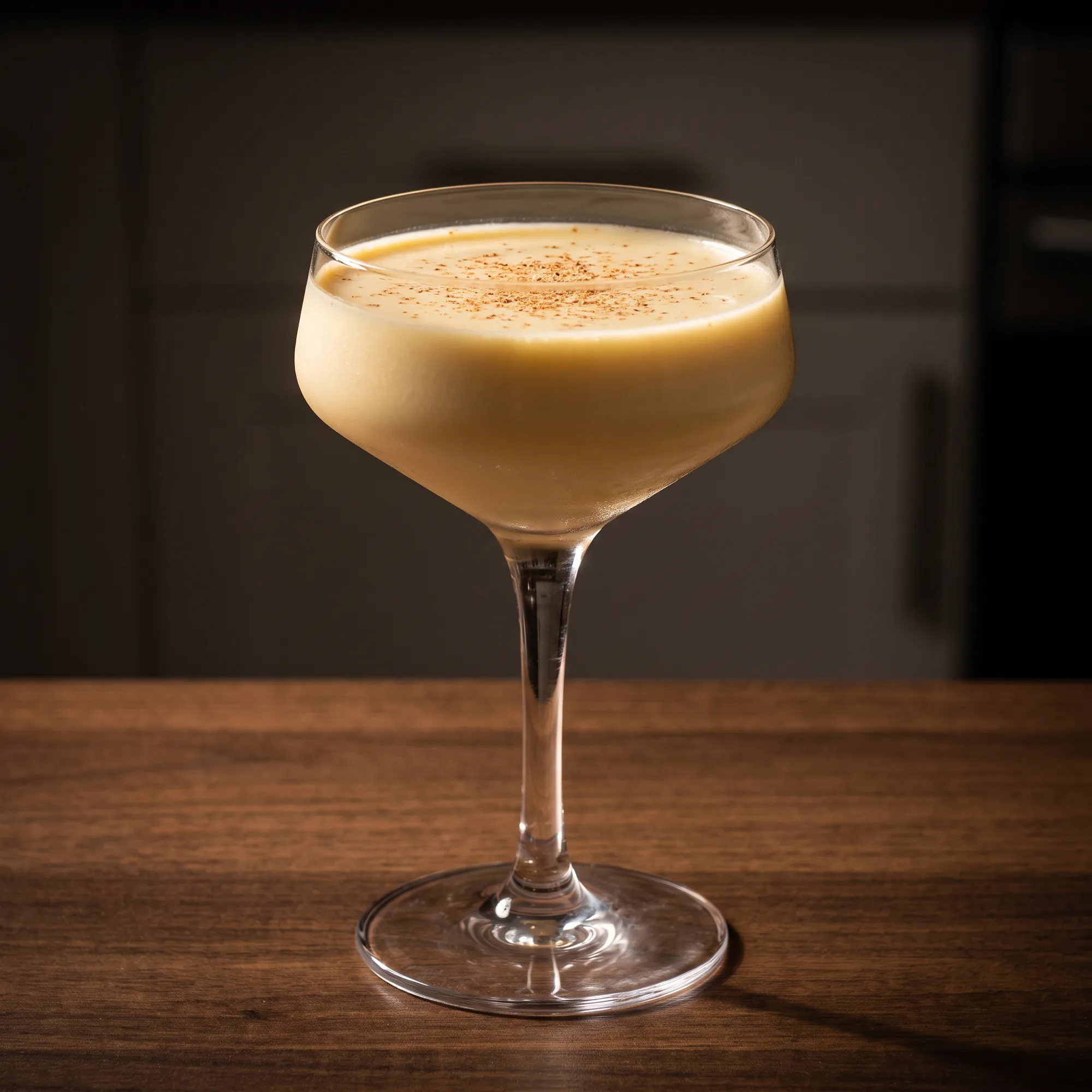
Aperitif/Liqueur
Golden Cadillac
Equal parts Galliano, white crème de cacao and cream, shaken into a pale gold, vanilla-sweet dessert cocktail.
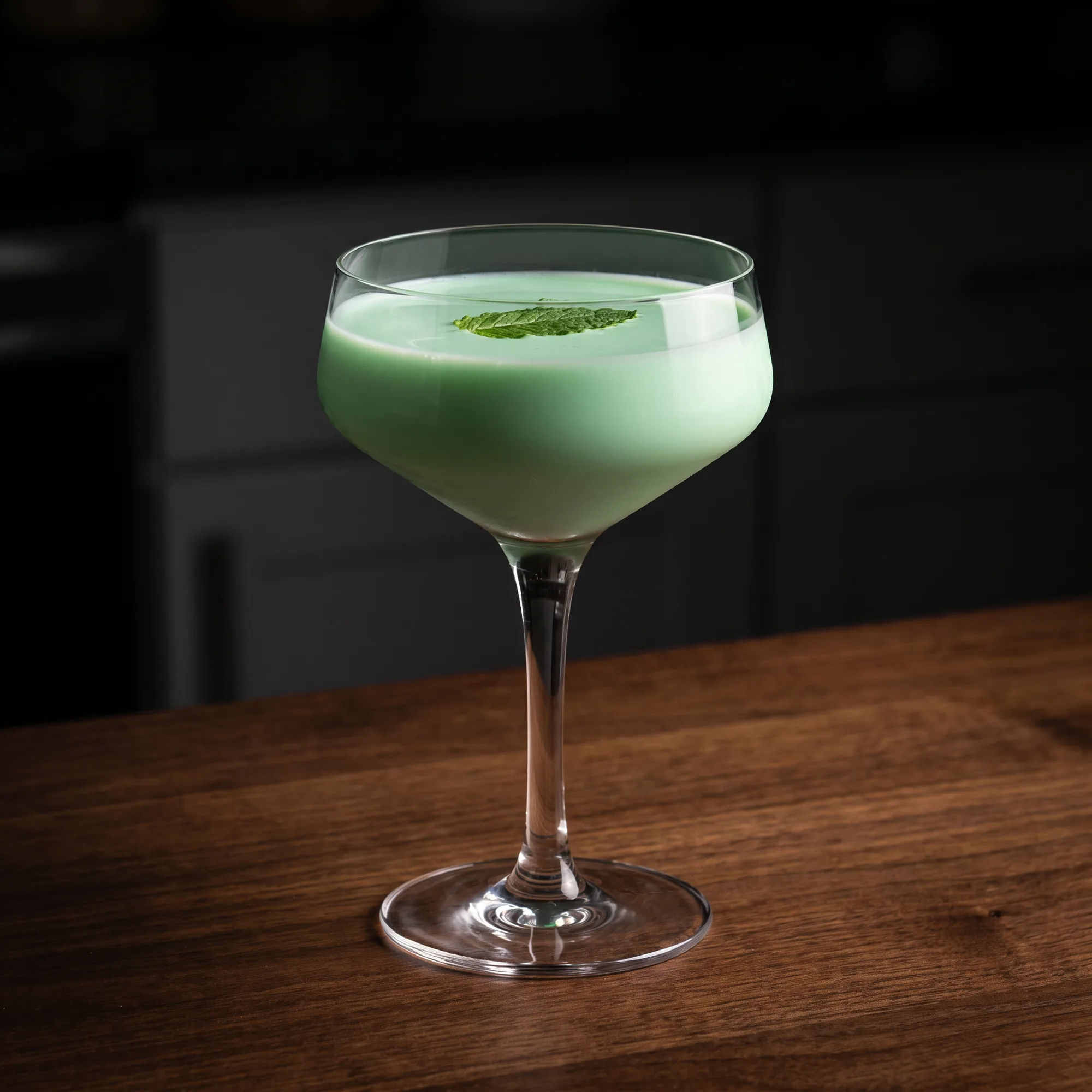
Aperitif/Liqueur
Grasshopper
Mint and chocolate, whipped smooth with cream — a 1918 New Orleans dessert in a glass.
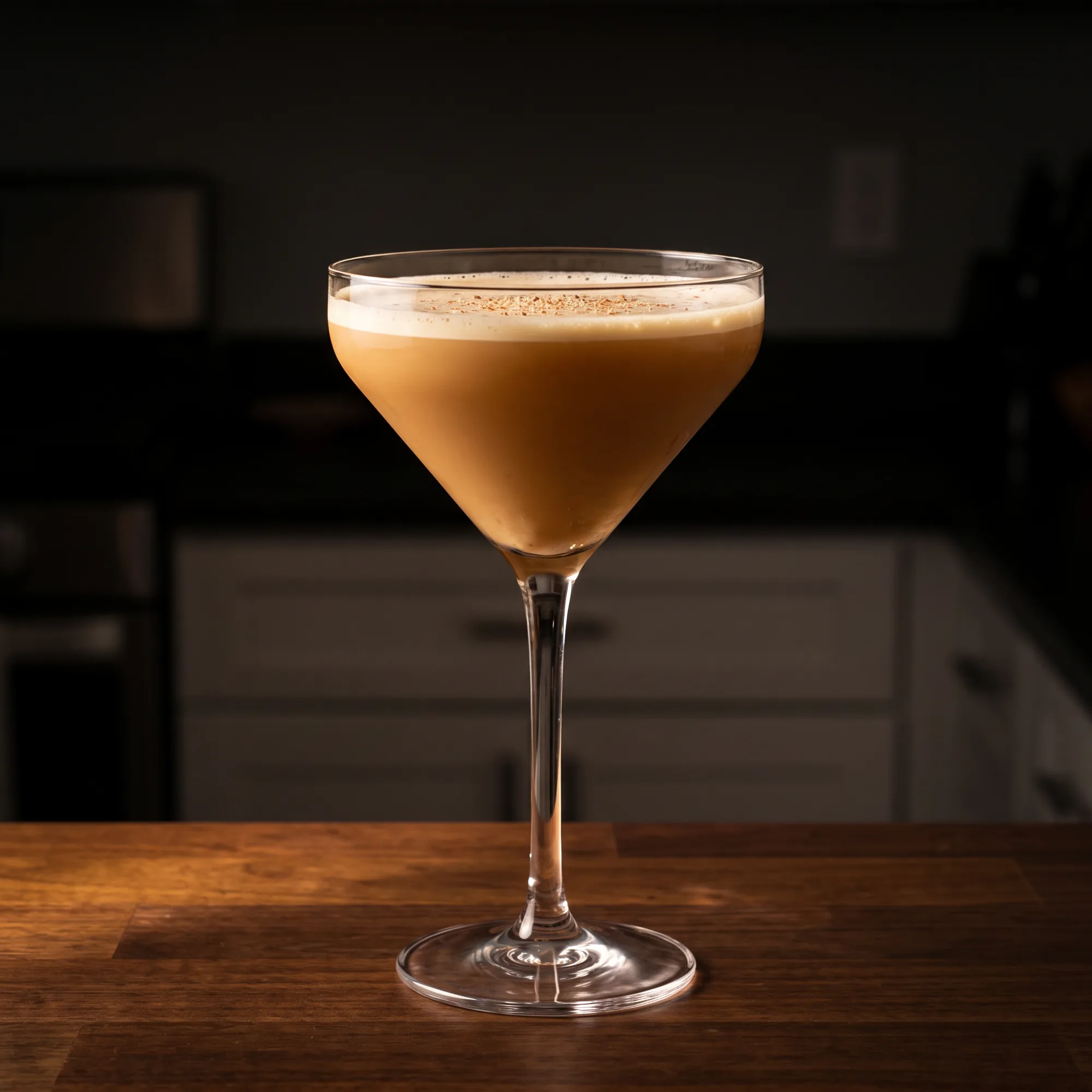
Vodka
Toasted Almond
Vodka, amaretto and Kahlúa shaken smooth — a coffee-and-toasted-nut dessert in a glass.
Vodka
Mudslide
Equal parts vodka, coffee liqueur and Irish cream — a dessert disguised as a cocktail.
Vodka
White Russian
Vodka, coffee liqueur and cream, built over ice — dessert in a glass.
Brandy/Cognac
Brandy Alexander
A dessert in a coupe glass — cognac, chocolate, and cream in equal, easy balance.